Your company upgraded to a more sophisticated accounting system. The implementation was declared complete. Months later, your team still doesn’t trust the numbers, the month-end close takes longer than it did before the switch, and leadership is making decisions without reliable financials.
This is what we call a stalled accounting system implementation, and it is far more common than software vendors admit. This post covers why implementations stall, the problems we see most often, and how to get your books accurate and your team confident in the new system.
Why Growing Companies Upgrade Their Accounting System
Entry-level software like QuickBooks works well until a business outgrows it. Multi-entity consolidation, complex revenue recognition, high-volume inventory, and deeper reporting needs all push past what basic software was built to handle.
At that point, moving to an industry-specific or enterprise system such as NetSuite, Sage Intacct, Intuit Enterprise, or Xledger makes sense. These systems handle subledgers and specialized processes that entry-level software cannot. The software itself might be good, but the implementation is usually a problem.
Why Accounting System Implementations Stall
Most software companies offer an implementation team that promises a clean transition from your old system to theirs. That team configures the software and loads the data your company hands them. They don’t take responsibility for whether that data is correct or whether it makes sense from a big-picture accounting perspective.
Your accounting team knows your business, but they have never configured this software. The implementation team knows the software, but they don’t know your business. Nobody on the project owns the space between the two, and that’s how errors get built into the new system from day one.
What Happens After Go-Live
Once the implementation is declared complete, the vendor moves on. Your team is left with a system they weren’t fully trained on and data they don’t fully trust.
When you ask for help, the software company typically points you to a third-party consultant. Those consultants know the software well, but they don’t know your financial data or your processes, so they struggle to translate your business into the system correctly. They are also expensive, and you pay by the hour while they learn your company.
Meanwhile, the problem compounds. Every month of new transactions posted on top of bad opening balances makes the cleanup larger and more complex.
Signs Your Implementation Has Stalled
If any of these sound familiar, your implementation isn’t finished, regardless of what the project plan says.
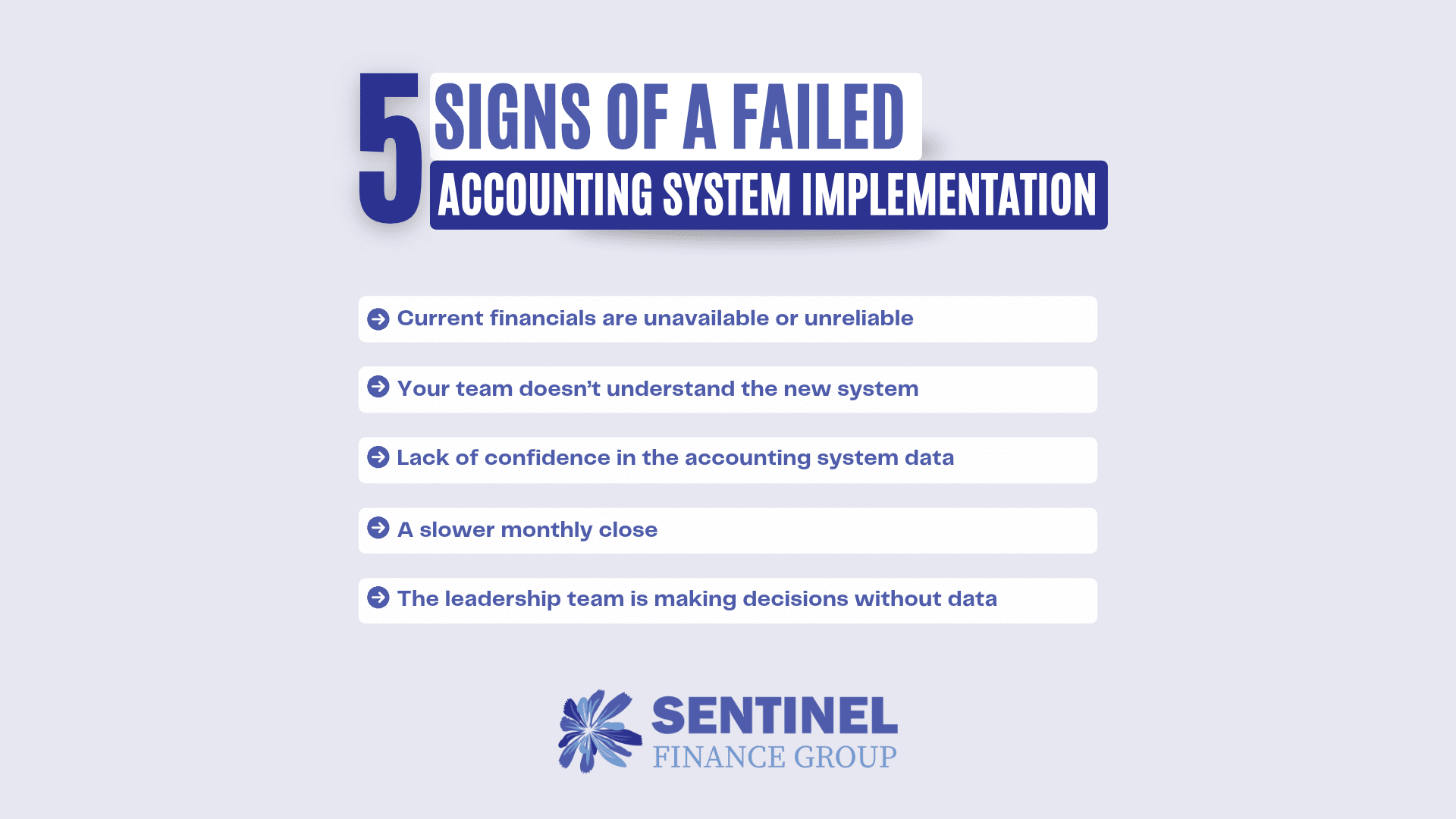
Your balance sheet doesn’t reconcile. Account balances don’t tie to bank statements, loan statements, or your prior system.
Your AR and AP reports don’t match the general ledger. The aging reports say one thing and the balance sheet says another.
Your month-end close got slower. The new system was supposed to speed things up. Instead, your team spends days chasing differences.
Your team lives in spreadsheets. Staff are building workarounds outside the system because they don’t trust what’s inside it.
Leadership has stopped using the reports. Decisions are being made on gut feel or old numbers because the current financials aren’t available or reliable.
The Most Common Problems We Fix
Across the implementations we’ve cleaned up, these are the issues we see come up again and again:
Duplicated historical data. Transactions or balances get imported twice during the data migration, inflating revenue, expenses, or balance sheet accounts.
Subledgers that don’t match the general ledger. Accounts receivable, accounts payable, inventory, or job cost subledgers fall out of sync with the GL.
Incorrect opening balances. The balance sheet the new system started with doesn’t match where the old system ended.
Setup that doesn’t fit the business. The chart of accounts, dimensions, or classes were configured without a clear view of how leadership needs to see the numbers.
Processes nobody was trained on. Your team is entering transactions the way they did in the old system, which creates new errors every month.
Many of these errors can’t be fixed by deleting the bad entries. Enterprise accounting systems are built with audit trails that restrict simple deletion. The fix requires a series of correcting journal entries that bring each subledger back in line with the general ledger. Getting those entries right requires knowing both how the software works and how the different accounting functions connect to each other.
How Sentinel Finance Group Fixes a Stalled Implementation
We have worked through these situations for multiple clients and fixed implementations across a variety of accounting systems. The process follows the same core steps.
Assess where the numbers are inaccurate
We reconcile the new system against your source data and your prior system to pinpoint exactly where the errors are and how extensive they are.
Fix the biggest issues first
Leadership needs reliable numbers quickly. We prioritize the corrections that affect cash, the balance sheet, and the reports you use to make decisions, then work through the rest without letting the project drag.
Align the subledgers with the general ledger
We book the correcting entries needed to bring AR, AP, and every other subsystem back in line with the GL, so every report in the system tells the same story.
Train your team and set up a proper close
We work alongside your team to establish the right procedures in the new system and build a month-end close process they can follow confidently.
Provide ongoing oversight and reporting
Once the data is accurate, we stay on to provide regular financial reporting and oversight, so your leadership team makes decisions based on numbers it trusts.
Getting It Right Before You Implement
The cheapest cleanup is the one you never need. If you’re preparing to switch systems, bring in finance oversight before the data migration starts. We review the chart of accounts, clean up historical balances before they’re imported, and confirm the opening balances tie out, so the new system starts accurate and stays that way.
What Working With Sentinel Finance Group Looks Like
Our clients get the oversight the implementation process was missing.
Software and accounting expertise together. We understand how these systems work and how your finances need to flow through them.
One consistent team. The people who fix your implementation are the same people who support your close and reporting afterward.
Full coverage under one roof. Bookkeeping, controller, and CFO-level support from one firm, so nothing falls through between providers.
Transparent pricing and no long-term contract. You know what you’re paying up front, and you stay because the work is good.
A new accounting system is a major investment, and it should give you better financial visibility. Whether you’re about to start an implementation or you’re stuck with a system nobody trusts, the answer is the same. Someone who understands both the software and your finances needs to own the result.
Schedule a conversation with Sentinel Finance Group.
Eric Reinacher is a fractional CFO who brings over a decade of financial leadership experience working with growing companies. He helps business owners improve financial visibility, make better decisions with their numbers, and build businesses that increase in value. LinkedIn
Sentinel Finance Group is a Kansas City-based fractional CFO firm providing financial leadership, controller, and accounting services to $1M-$50M businesses across the US.
FAQ
What is a stalled accounting system implementation?
A stalled implementation is one that was declared complete but left the company with inaccurate data, unreconciled accounts, or a team that doesn’t know how to use the new system correctly. The software is live, but the financials can’t be trusted.
Why do accounting software implementations go wrong?
Implementation teams know the software but not your business, and your accounting team knows the business but not the software. Without someone who understands both, errors from the data migration and setup get built into the new system.
Why can’t the implementation team fix the errors?
Implementation teams configure the system and load the data your company provides. They don’t review whether that data is correct from an accounting perspective, so they aren’t positioned to find or fix the underlying errors.
Why can’t I just delete the bad data in my new accounting system?
Systems like NetSuite and Sage Intacct maintain audit trails that restrict deleting posted transactions. Errors are corrected through a series of journal entries that realign the subledgers with the general ledger.
What are the most common accounting implementation errors?
The most common errors are duplicated historical data from the import, AR and AP subledgers that don’t match the general ledger, incorrect opening balances, and a chart of accounts that doesn’t fit how the business operates.
How long does it take to fix a stalled implementation?
The timeline depends on how many months have posted since go-live and how many subsystems are affected. Sentinel Finance Group corrects the issues that matter most to leadership first, so reliable numbers come early in the process.
Which accounting systems does Sentinel Finance Group work with?
Sentinel Finance Group has fixed implementations across a variety of accounting platforms, including enterprise and industry-specific systems like NetSuite, Sage Intacct, Xledger, and Intuit Enterprise.
Should I get outside help before implementing a new accounting system?
Yes. Finance oversight before the data migration catches errors in historical balances and system setup before they’re imported, which costs far less than cleaning them up after go-live.