A good CPA can be one of the most important partners in your business. Yet many business owners are not sure whether their CPA is truly adding value or simply filing returns and responding when asked.
Here is how to recognize a good CPA and some warning signs that suggest gaps.
What a Good CPA Does Well
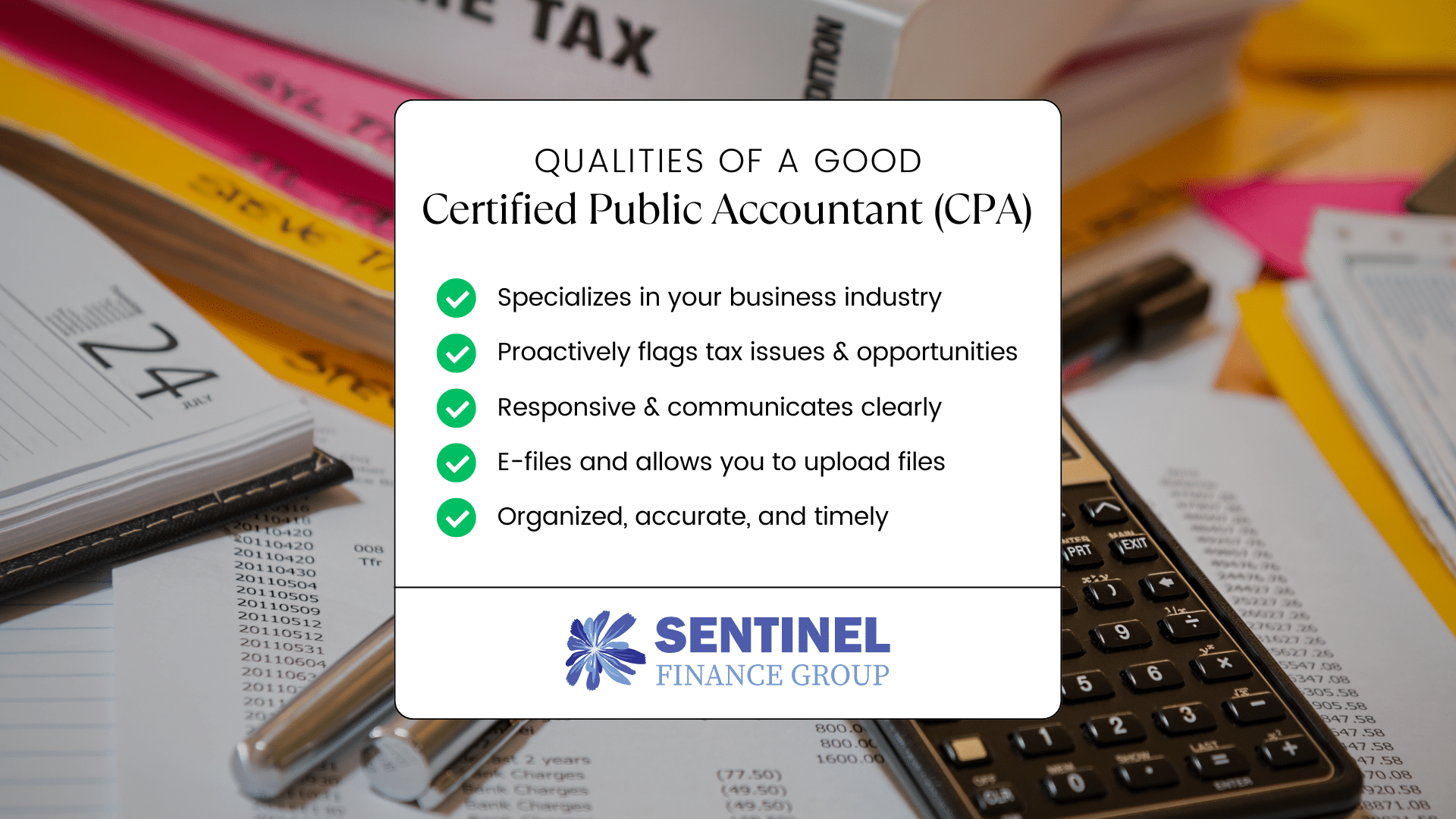
They are accurate and reliable
A strong CPA delivers clean, accurate tax returns and filings, and meets deadlines consistently. While they should catch mistakes and prioritize accuracy, they do not need to micromanage every detail unless there is a special situation. Some CPAs chase perfection at a high cost, billing $10,000 to save $1,000. Do not hesitate to get a second opinion if something feels off.
They understand your business
The best CPAs specialize in working with business owners, ideally within your industry. They take the time to understand how your business operates, including your revenue model, ownership structure, and major year-over-year changes. You should not have to re-explain your business every time you speak.
They proactively flag tax issues and opportunities
A good CPA does not just show up at tax time. They alert you when a decision could have tax consequences, when estimated payments should be adjusted, or when potential risks arise.
They communicate clearly
Look for someone who is responsive, approachable, and communicates in plain language. A good CPA explains issues so you can make informed decisions, not just comply with rules. You should never leave a conversation confused or unsure of next steps.
Warning Signs Your CPA Might Not Be Effective
Red flags include:
-
- You only hear from your CPA once a year at tax time
- They do not e-file or offer a secure way to upload files
- Financial or tax issues surface after the fact
- You receive IRS or state notices, or they are not handled promptly and clearly by your CPA
What You Should Not Expect from your CPA
Having a CPA does not automatically mean your financial function is strong. Some business owners assume their CPA is ineffective when the real issue is missing financial leadership.
A CPA focuses on compliance, tax strategy, and historical accuracy. A CFO focuses on forward-looking strategy, cash flow, decision support, and financial systems
A good CPA looks backward to report and file correctly.
A good CFO looks forward to help you plan, grow, and avoid problems before they happen.
In the healthiest businesses, these roles work together, not in place of one another.
The Best Setup
If your business is growing, facing complexity, or making bigger financial decisions, the question is not just whether you have a good CPA, it is whether you have the right financial support overall.
A fractional CFO works alongside your CPA to:
-
- Improve the quality of the numbers your CPA relies on so your CPA focuses on taxes, not cleaning up your books
- Translate financial data into actionable insight
- Prepare you for tax conversations with better context
- Ensure decisions are evaluated before they create tax or cash issues
When CPA and CFO roles are aligned, business owners are best positioned for growth.
Final Thought
A good CPA is essential, but they are not meant to handle everything finance-related. If you feel confident about taxes and compliance but uncertain about cash flow, profitability, or financial strategy, that is not a CPA failure. It is a sign your business has outgrown a single-lens financial view and needs broader financial leadership.
Sentinel Finance Group brings decades of experience providing fractional CFO and controller services to small and mid-sized businesses and has extensive expertise in real estate, construction, and logistics.